
HR software for startups is usually a decision founders keep pushing to the back of the queue, right behind product development, funding rounds, and a dozen other things that feel more urgent. The problem is that by the time it becomes obviously urgent, the damage is already done. Onboarding is inconsistent, performance conversations are happening informally or not at all, payroll is a spreadsheet nightmare, and the team that was easy to manage at five people is starting to feel chaotic at fifteen.
This blog is a practical look at when and why startups need to take HR operations seriously, what good hr management software for startups actually does day to day, and how to find something that fits your budget and your headcount without locking you into a system built for companies ten times your size.
Do Startups Need HR Software or Is It Something You Figure Out Later?
Yes, and earlier than most founders expect. There is a widespread assumption that hr software is something you graduate into once you reach a certain size. That assumption causes real operational damage.
The moment you have more than a handful of employees, you have HR processes, whether you have named them or not. Someone is drafting offer letters. Similarly, another person is tracking time off, even if it is just in their head. And someone is responsible for getting new hires up to speed. With three people, doing all of that manually is fine. At ten, it starts creating gaps. At twenty, those gaps are the reason good employees start leaving.
When Should a Startup Get HR Software
The clearest signal is when managing people starts pulling a founder or office manager away from actual work. For most startups, that moment comes somewhere between eight and fifteen employees. At that point, the cost of not having a system, missed onboarding steps, inconsistent payroll, and no visibility into performance, outweighs the monthly cost of fixing it.
Startups that wait until the pain is undeniable are usually already six months behind where they needed to be.
HR Challenges for Early Stage Startups That Nobody Warns You About
The challenges that catch early-stage startups off guard are rarely dramatic. They are quiet, and they accumulate slowly.
No structured onboarding
New hires take weeks longer to become productive than they should.
Informal performance feedback
Feedback happens in casual conversations, if it happens at all, with no documentation behind it.
Unreliable time off tracking
Leave records live in someone's inbox or a shared calendar that nobody fully trusts.
Error-prone payroll
Calculations get error-prone as headcount grows and comp structures get more complex.
Scattered employee records
There is no single place for employee records, so basic questions take longer than they should to answer.
These are the hr challenges for early-stage startups that eat away at morale and founder bandwidth at the same time.
What Does HR Software Actually Do for Small Companies
This is worth answering directly because there is a lot of noise around what hr software used by companies actually includes. At its most useful, good hr management software for startups handles four things that founders and small teams consistently get wrong when doing it manually.
Employee Onboarding Software for Startups: First Impressions Are Operational
Onboarding is a whole process of how a new hire goes from zero context to actually contributing, and most startups handle it differently every single time. There is no repeatable system, so the quality of someone's first few weeks depends entirely on who is managing them that month.
Employee onboarding software for startups fixes that. Every new hire moves through the same sequence, gets access to the same resources, and starts their role with the same foundation, regardless of how busy things are.
What good onboarding tooling actually handles:
Document collection in one place
Instead of scattered across email threads.
Role-specific training modules
New hires can work through these at their own pace.
Progress tracking
Managers always know where someone is without having to ask.
Automated task assignment
So steps do not get skipped during a hectic hiring week.
Performance Management Tools for Startups: Structure That Does Not Feel Like Corporate Theater
Performance management in a startup should not feel like a bureaucratic ritual. But it also cannot be so informal that there is no accountability. Performance management tools for startups give teams a way to run reviews, collect feedback, and track progress without turning it into a painful quarterly exercise.
Startups that retain their best early employees almost always have one thing in common. Those employees feel like their growth is being taken seriously. A lightweight but consistent performance system communicates that clearly, without requiring a full HR department to run it.
Affordable HR Software for Startups: What the Cost Conversation Actually Looks Like
How much does HR software cost for startups is one of the most searched questions in this space and one of the least clearly answered. The range is genuinely wide. Enterprise HRMS platforms can cost hundreds of dollars per user per month. That is not where startups belong.
Affordable HR software for small startups typically lands between five and twenty-five dollars per employee per month. Some platforms offer free hr software for startups at very small headcounts, usually under ten users, with real limitations on reporting and support. Those free tiers are useful to know about. But they tend to create switching friction later when you outgrow them, and you will outgrow them.
HR Software for 10 Employees: You Do Not Need Enterprise Complexity
A ten-person startup does not need a system built for ten thousand. What it actually needs is clean employee profiles, payroll HR software that does not require constant manual correction, attendance tracking that does not need a dedicated admin, and manager visibility that does not mean reading a fifty-page report.
The best hr software for startups at this size is the kind your team will actually open and use. A comprehensive platform that sits unused because the interface is confusing is worth nothing.
Best HRIS for Startups Under 50 Employees: The Features That Matter at This Stage
When a startup is pushing toward fifty employees, the priorities shift. At that scale, what you need includes:
An org chart that updates without manual effort
Reflects team changes as they happen.
Shift scheduling and attendance feeding directly into payroll
No manual reconciliation needed.
Learning and training management
Build capability internally, not just hire for it.
Analytics with real visibility
Into attendance patterns and team performance.
Role-based access
So the right people see the right information.
This is where HRMS software for startups earns its value clearly. The workarounds that held together at ten people become genuinely unsustainable at forty.
What HR Software Do Startups Use Across Different Markets
The answer varies by geography. HRM software for US startups tends to prioritize benefits integrations and state-specific compliance. The best HRM software for UK startup founders usually includes GDPR-compliant data handling and alignment with UK employment law. Startups looking at the best HR software for startups in India often need multi-location payroll support and flexibility around statutory requirements that differ across states.
What stays consistent across all of these markets is simpler to describe. Founders want something that does not need a dedicated implementation team and does not blow the budget before the business is profitable.
HR software companies in Pakistan and across the broader South Asian market have seen real growth in this space. Startups in Lahore, Karachi, and Islamabad are increasingly choosing cloud-based workforce management software for growing startups over trying to build internal systems from the ground up. Any serious hr software house operating in these markets right now is building cloud-first because that is what the market has moved toward.
How OneVision Works as a Startup HR Toolkit
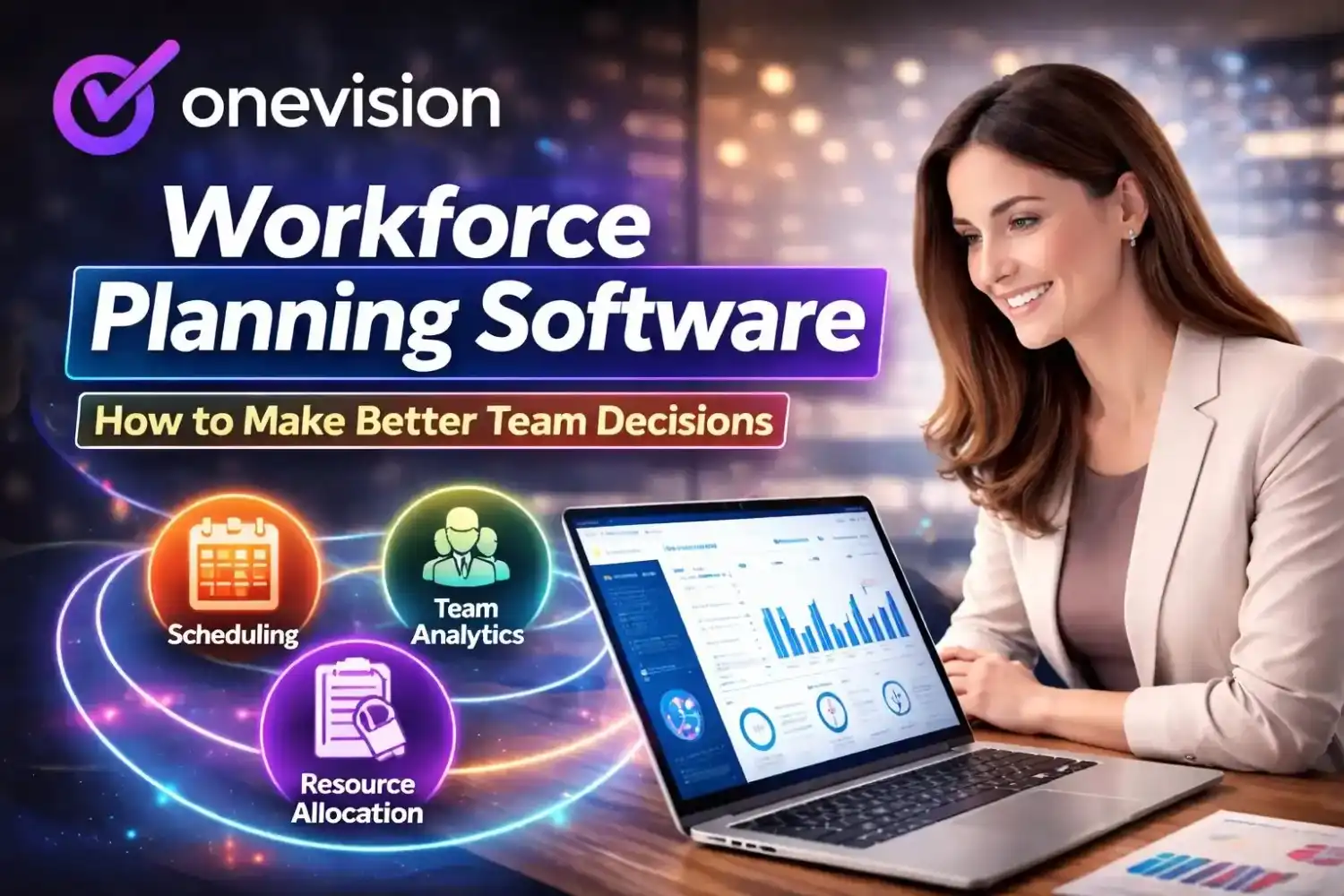
OneVision is built as a complete workforce management platform that covers what a growing startup actually needs, without the complexity that makes enterprise software exhausting. It is the kind of recommended HR software for startups that makes sense at ten employees and still makes sense when you reach a hundred.
What the platform brings together in one place:
HR management
Employee profiles, document storage, onboarding and offboarding, and org chart visibility.
Scheduler module
Shift planning, GPS clock-in and clock-out, and payroll-ready attendance reports.
Performance feedback tools
Including 360-degree reviews, team ratings, and documented action items.
eLearning module
Build internal training programs with progress tracking and certifications.
Analytics dashboards
Real data on productivity, attendance, and team performance.
Internal communication tools
Announcements and updates live in the same system as everything else.
For hr software for tech startups, especially, managing remote and distributed teams from one dashboard matters. OneVision handles that without needing separate tools for scheduling, training, feedback, and communication. It is workforce management software for growing startups that replaces the patchwork of apps and spreadsheets most early-stage teams are running on.
Conclusion
HR software for startups is not something to think about after you have already scaled. It is the operational foundation that determines whether scaling goes smoothly in the first place. Getting people onboarded properly, managed consistently, and developed deliberately is what separates startups that hold onto great employees from those that keep rehiring for the same roles.
The best hr management software for startups is the one your team will actually use, fits your current headcount, and grows with you without forcing a painful platform switch every time you hit a new milestone. OneVision is built to be exactly that.
Frequently Asked Questions
Read Other Blogs
Explore more insights and tips on business management
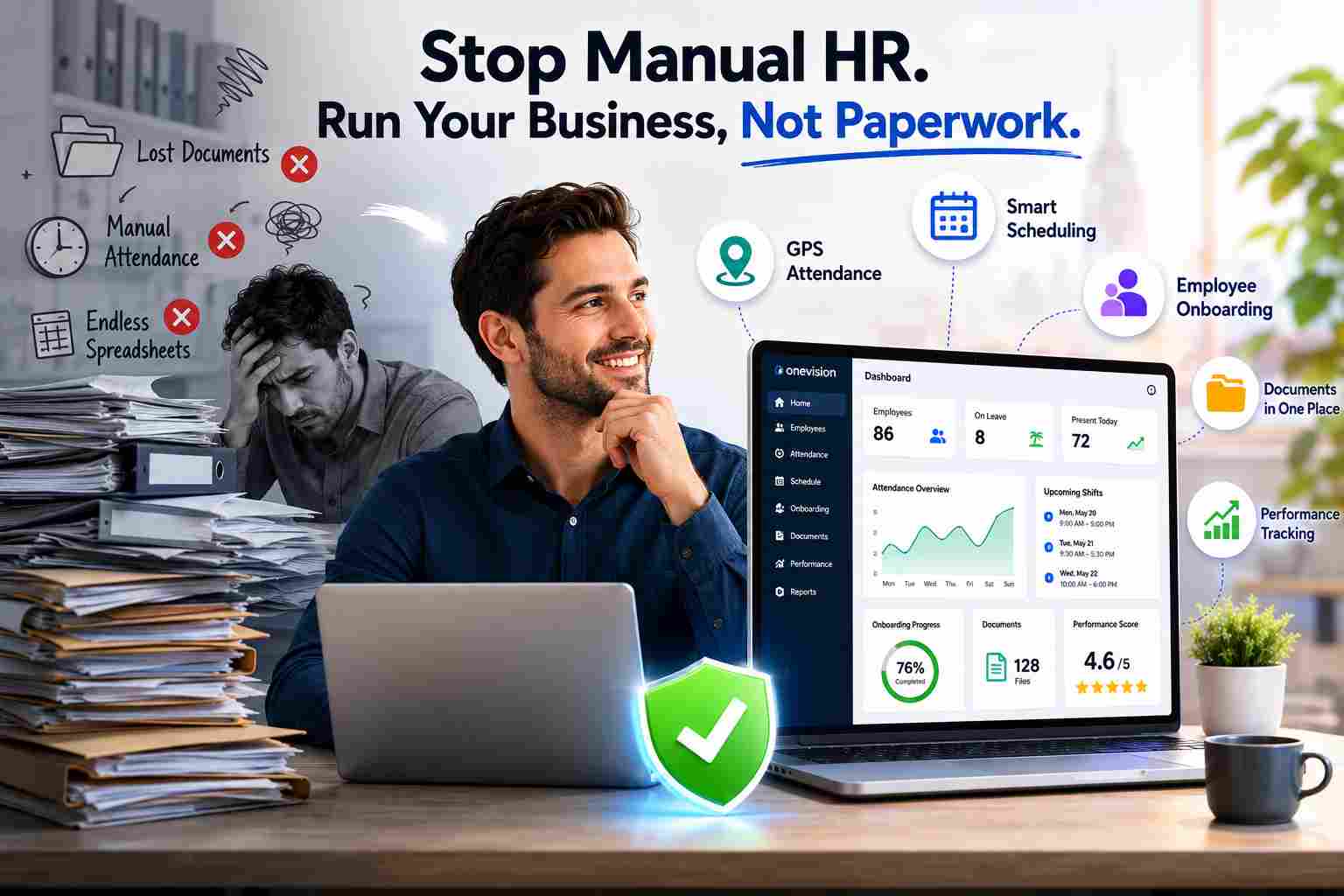


How Does the Best HR Software Help Businesses Make Better Financial Decisions?
Discover how the best HR software helps businesses reduce hidden operational costs, improve workforce efficiency, and make smarter financial decisions through automation, analytics, and better workforce management.





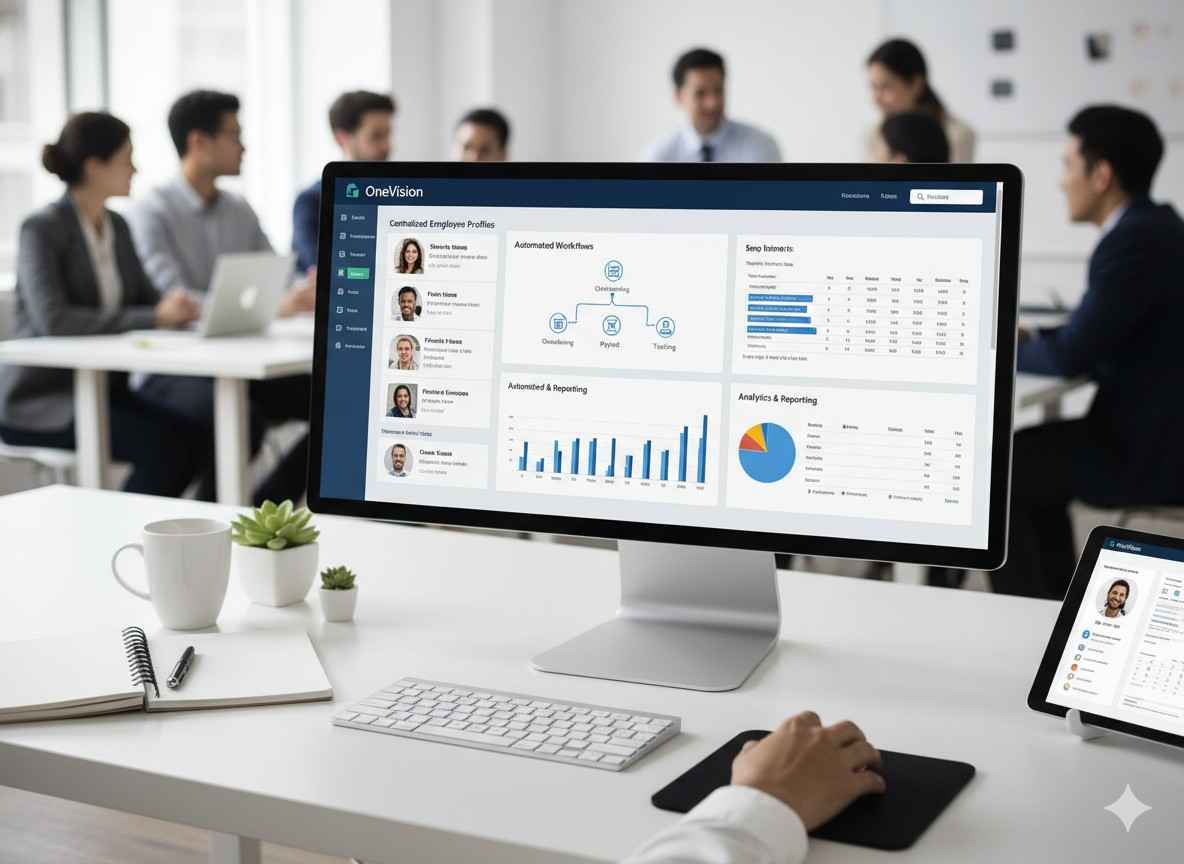




Why Use Software That Helps in Managing a Business?
When running a company, you need software that helps in managing a business, as its tasks, teams, customers, and finances all need your attention. Discover why companies are adopting all-in-one business management systems.