Finding the right HR software Canada sounds simple until you actually start looking. Then you realize most of the tools out there were built for American businesses, with American labor laws, American payroll rules, and American compliance standards baked in by default.
Canadian businesses have a different reality. Provincial employment standards vary. Payroll rules differ. Bilingual requirements exist in certain provinces. And small businesses here are often managing lean teams where one HR person is doing the job of three.
This blog is about what actually matters when you're picking OneVision as a Canadian business, and what to watch out for.
Key Takeaways
Most HR tools were built for American businesses. Canadian compliance is different, and it matters.
The best HR software for small businesses in Canada needs to be practical, not just feature-rich.
Cloud HR software Canada gives you flexibility for remote teams and removes the IT overhead.
HR digital transformation is already happening in most businesses. The question is whether it's happening well.
Employee lifecycle management, performance tools, and HR automation together save more time than any single feature on its own.
Always check whether HR software pricing in Canada makes sense for your team size before committing.
The Canada Problem With Most HR Tools
Walk through any list of the best HR software Canada has available, and you'll find mostly the same names. Big American platforms. Impressive features. Pricing in USD. And support teams who have never heard of the Ontario Employment Standards Act.
That's not a small issue. A human resource management system (HRMS) that doesn't understand how statutory holidays work in British Columbia or how vacation pay accrues differently across provinces is going to create compliance headaches that cost far more than the software itself.
Canadian HR Compliance Is Not One-Size-Fits-All
HR compliance software Canada needs to account for the fact that employment law here is largely provincial, not federal. What applies in Quebec doesn't apply in Alberta. Termination rules in Ontario are not the same as in Manitoba.
This is one of the biggest gaps in generic HR tools. They treat Canada as one jurisdiction when it's actually ten different ones with their own rules.
What Small and Mid-Sized Canadian Businesses Actually Need
Not every business needs a sprawling enterprise platform. Most small and medium businesses need something that works well, doesn't take six months to implement, and doesn't require a full-time administrator just to keep running.
Here is what comes up again and again when Canadian business owners talk about what they actually use from any HR management software, Canada platform, or HR system Canada.
Payroll software Canada
Payroll in Canada has CRA requirements, province-specific deductions, and a T4 season. Software that handles this cleanly, without you having to manually cross-check everything, is worth a lot.
Attendance tracking software
Knowing who's in, who's out, who's late, and how it all maps to your scheduling is basic. But surprisingly, a lot of tools do this badly. Time tracking software Canada businesses can rely on needs to work on mobile too, not just desktop.
Leave management system Canada
Managing vacation, sick days, statutory leave, and parental leave across different provincial rules is genuinely complicated. A proper leave management system Canada businesses can actually rely on needs to handle these nuances automatically, not leave it to the HR person to track in a spreadsheet.
Employee onboarding software
First impressions matter. A good hiring and onboarding workflow means new hires get their documents, access, and training sorted before their first day, not three weeks into the job.
The Shift to Cloud HR Software
More Canadian businesses are moving away from on-premise systems toward cloud HR software Canada options. The reasons are pretty straightforward.
Cloud-based HR platforms update automatically. Your team can access them from anywhere, which matters more than ever with remote and hybrid work now being the normal setup for a lot of organizations. And for small businesses, especially, the cloud means no IT infrastructure to maintain.
Remote Workforce Management Is Now a Real Requirement
Remote workforce management isn't a nice-to-have anymore. If part of your team works from home, from different cities, or across provinces, your HR system needs to support that without turning into a coordination nightmare.
A Canadian HR software solutions platform built for this reality should handle scheduling, time tracking, and communication across distributed teams without requiring everyone to be in the same building.
Beyond the Basics: Where Good HR Software Adds Real Value
Once the core stuff is working, good HR tools start pulling their weight in other areas.
HR Analytics Tools and Actually Making Decisions
HR analytics tools give managers visibility into things that used to require someone to manually pull reports. Turnover trends, attendance patterns, and performance data across teams. When that information is in front of you, decisions get easier to make and easier to justify.
Workforce optimization isn't just a buzzword. When you can see where your staffing costs are running high or where your best performers are concentrated, you can act on it instead of guessing.
Performance Management and Employee Growth
A performance management system that works is one where managers and employees actually use it, not one that gets opened once a year during review season.
Good talent management system setups build feedback into the regular rhythm of work. Short check-ins. Ongoing goal tracking. 360-degree feedback that gives people a real picture of how they're doing.
Employee Engagement Tools That Aren't Just Surveys
Engagement is one of those things that's easy to measure badly. Sending a quarterly survey and calling it done is not engagement. Employee engagement tools that are worth using give managers real-time signals, not lagging indicators that show a problem six months after it develops.
HR Digital Transformation for Canadian Teams
A lot of Canadian businesses are in the middle of an HR digital transformation right now, even if they don't call it that. They're replacing spreadsheets with proper systems. They're automating things that used to take hours. They're connecting data that lived in five different places.
HR Automation Tools That Save Real Time
HR automation tools don't replace HR people. They remove the repetitive, low-value work so HR people can focus on things that actually require a human. Sending reminders for contract renewals. Triggering onboarding checklists when a new hire is added. Routing leave requests to the right approver automatically.
HR operations automation like this adds up. A few hours a week across a small HR team is a significant return over the course of a year.
Employee Lifecycle Management End-to-End
Employee lifecycle management covers the full journey from the first job posting through to an employee's last day. Recruitment software Canada, applicant tracking system (ATS) Canada, onboarding, performance reviews, compensation management software, and offboarding all need to connect into one coherent picture.
When they don't, things fall through the cracks. Offer letters get delayed. Training doesn't happen on time. Exit processes get missed. And without a proper organizational management system keeping team structures visible, even basic things like knowing who reports to whom become surprisingly unclear.
What to Actually Look for in Canadian HR Software
Here's a practical checklist when evaluating any HRIS software in Canada:
Does it handle Canadian payroll and CRA compliance natively?
Ensure it understands Canadian payroll rules instead of treating every customer like a US business.
Does it support provincial variation in employment law?
The rules in Quebec, Alberta, and Ontario are not identical. Your software should reflect that.
Is the employee database easy to use day to day?
A usable HR database reduces manual work and improves record accuracy.
Can you manage employee records without it becoming a full-time job?
Your HR system should simplify document and record management, not create more overhead.
Does it include benefits administration software for Canadian benefits?
Benefits in Canada follow different structures than many US-focused products.
Is the workforce management feature genuinely Canada-specific?
Make sure the product is built for Canada, not just adapted from a US version.
What does HR software pricing in Canada look like?
Check whether pricing is per user, flat rate, or hides extra costs for payroll and compliance features.
Affordable HR software Canada options do exist. But cheap and useful are not always the same thing. The right question is whether the time saved justifies the cost, and for most businesses, it does.
Why OneVision Was Built for This
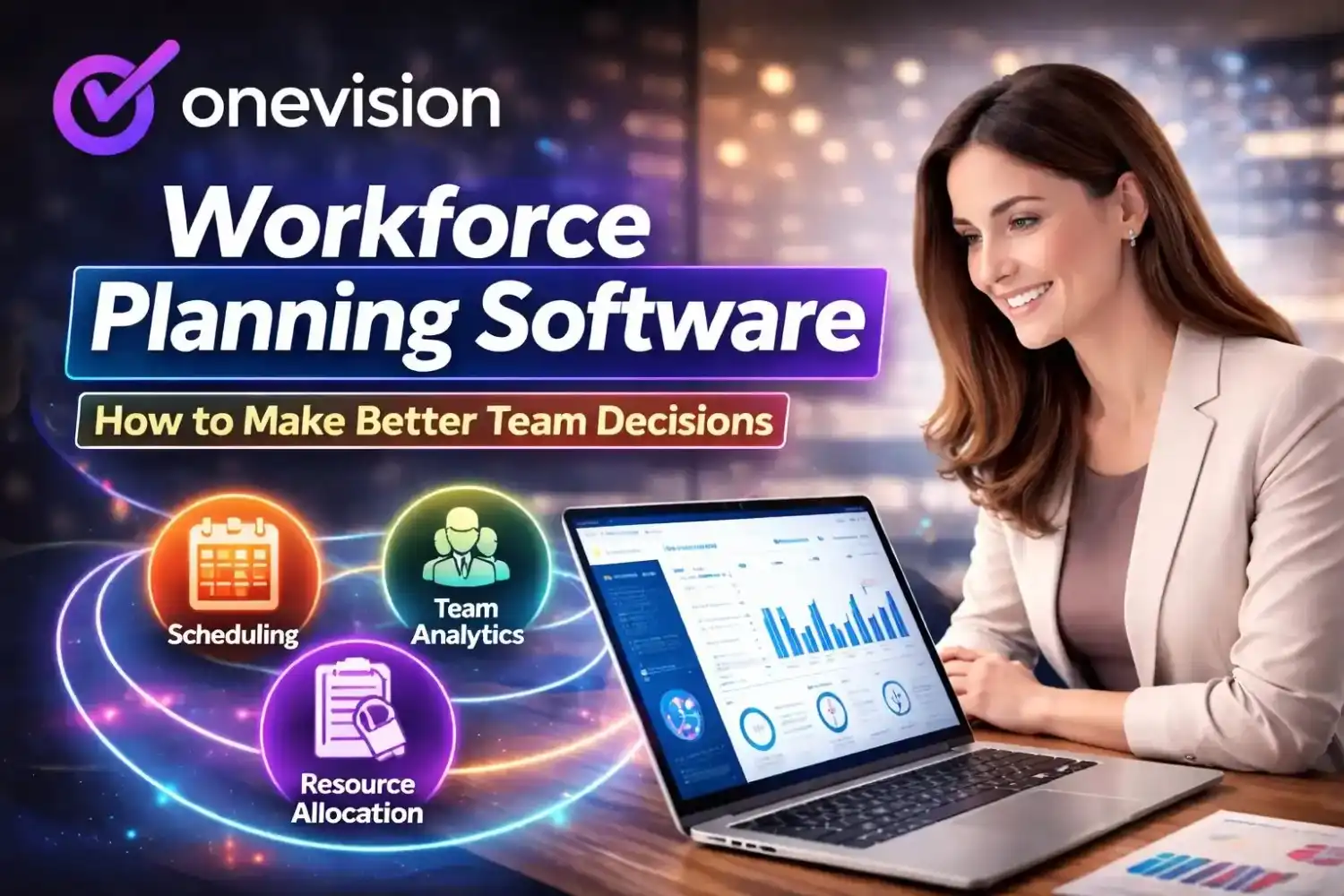
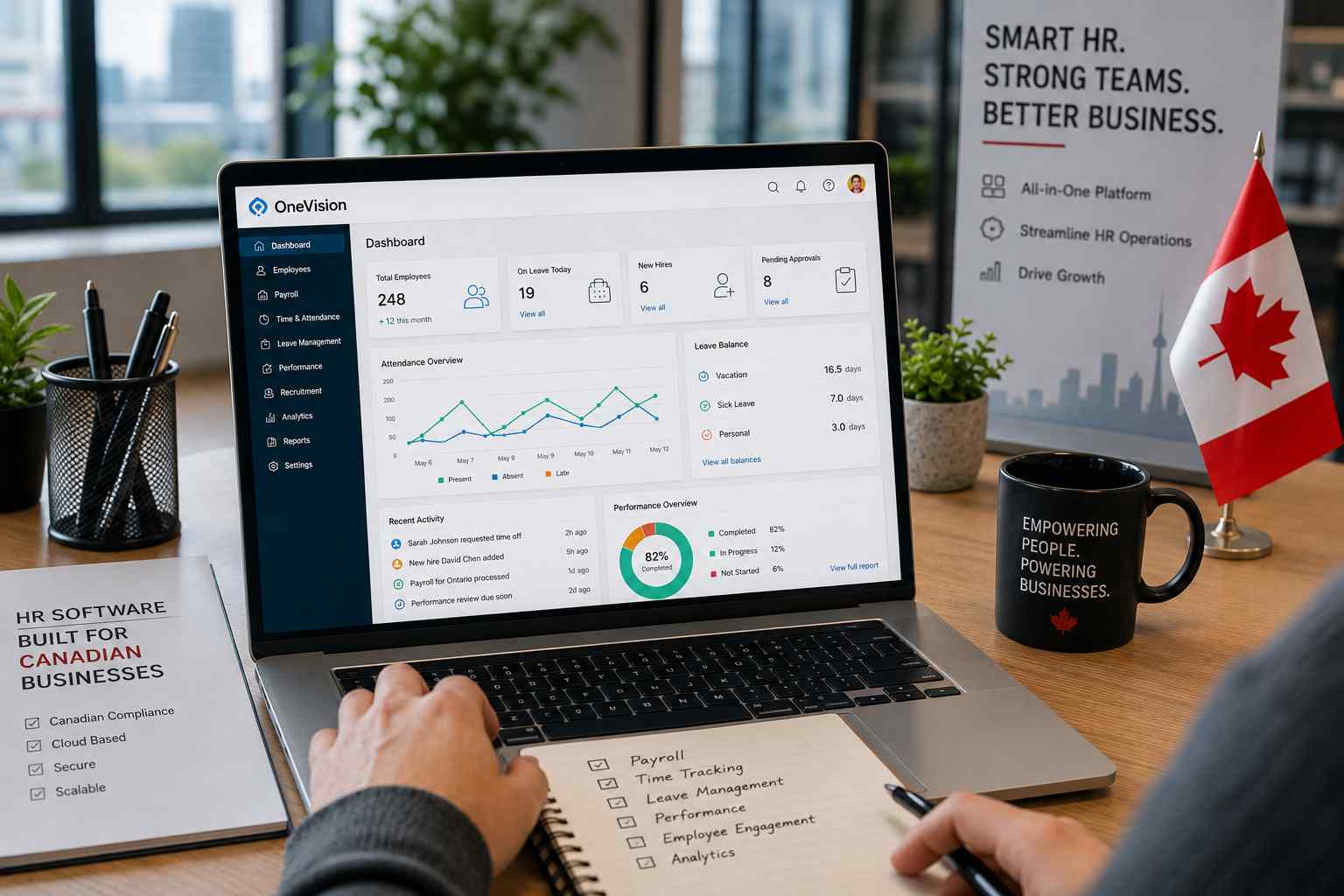
OneVision is a cloud-based HR platform built around what real workforce management actually looks like. Scheduling, HR management, analytics, employee engagement, eLearning, and communication all sit in one dashboard, not spread across five different tools that don't talk to each other.
For Canadian businesses managing teams across locations or dealing with the complexity of multi-province operations, having everything in one place with proper digital HR solutions built in makes a genuine difference. It's one of the HR software providers in Canada that approaches the problem from the ground up rather than bolting Canadian compliance onto a product designed for somewhere else.
Frequently Asked Questions
Read Other Blogs
Explore more insights and tips on business management



How Does the Best HR Software Help Businesses Make Better Financial Decisions?
Discover how the best HR software helps businesses reduce hidden operational costs, improve workforce efficiency, and make smarter financial decisions through automation, analytics, and better workforce management.










Why Use Software That Helps in Managing a Business?
When running a company, you need software that helps in managing a business, as its tasks, teams, customers, and finances all need your attention. Discover why companies are adopting all-in-one business management systems.