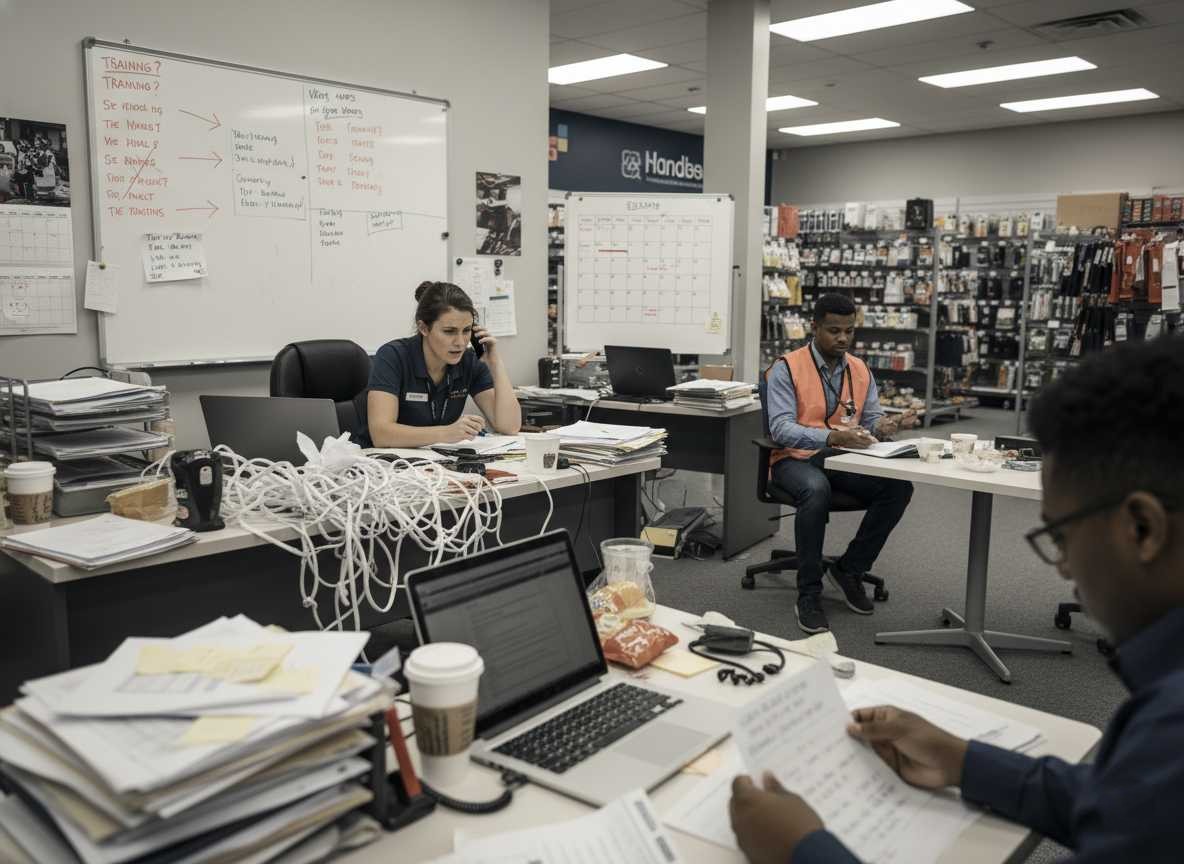
Most business owners don't realize they have a workforce problem until the best HR software reveals what's actually breaking inside their operations. An employee no-shows because they never got their shift update. A new hire quits in week two because nobody walked them through anything. Payroll runs late because the manager is still hunting down timesheets in a WhatsApp group from three days ago.
Let's see how you can avoid the problems that are quietly costing you every single week.
Key Takeaways
Operational chaos like missed shifts, disorganized onboarding, and chasing timesheets through WhatsApp are the signs your workforce is running on the wrong tools.
Manual scheduling alone can cost a manager 150+ hours a year. That time and money disappears quietly, which is exactly why most businesses never calculate it.
When performance feedback only happens informally, small issues grow into big ones. No paper trail means no way to address problems early or fairly.
Compliance risks like expired certifications and lapsed training do not announce themselves. By the time you notice, the damage is already done.
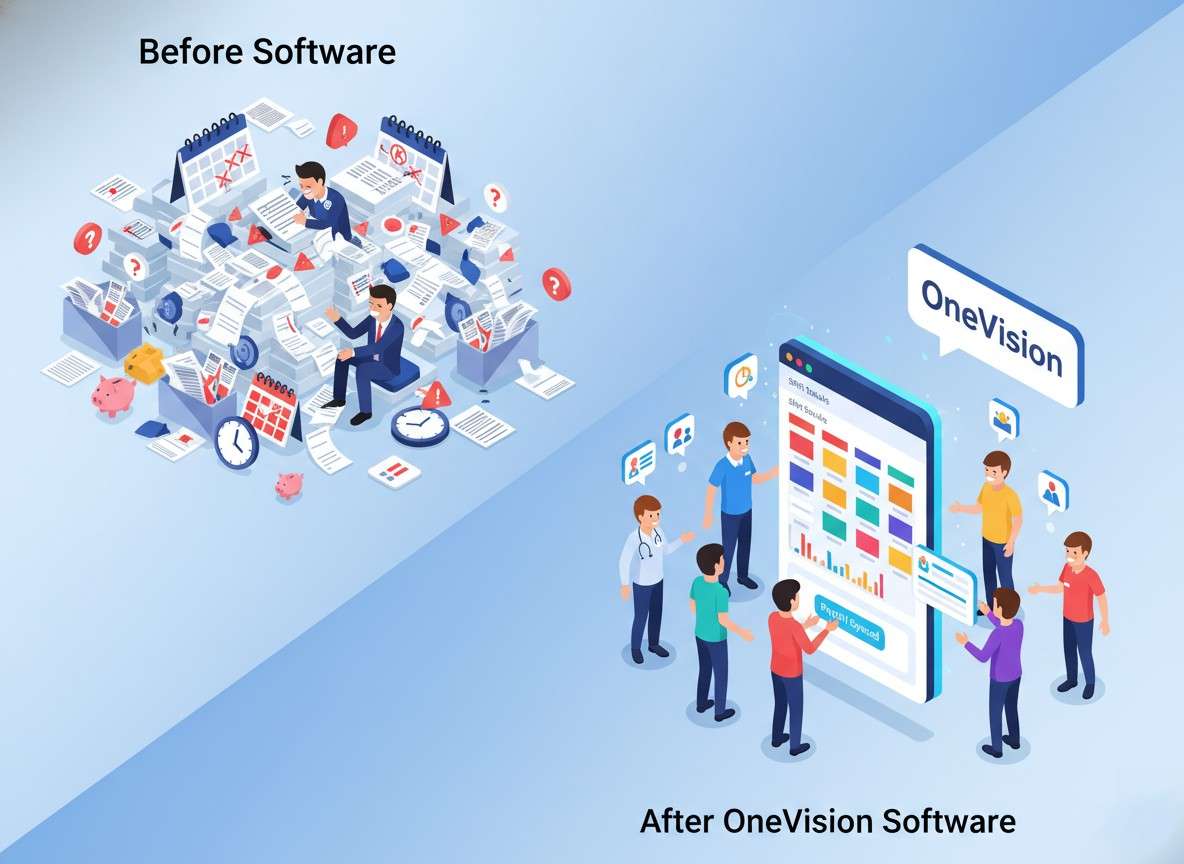
An all-in-one HR platform is not about adding more software. It is about replacing five disconnected tools with one system where scheduling, HR records, training, and analytics all talk to each other.
The best HR software is not just for HR teams. Employees, line managers, and business owners all use it differently, and that shared visibility is what actually changes how a business runs.
Scaling a business on spreadsheets and group chats does not get easier as you grow. It gets messier, faster.
The Best HR Software Solves Problems That Have Been Normalized
Here is the thing about operational dysfunction: once it becomes routine, you stop seeing it as a problem. You start calling it 'just how things work here.'
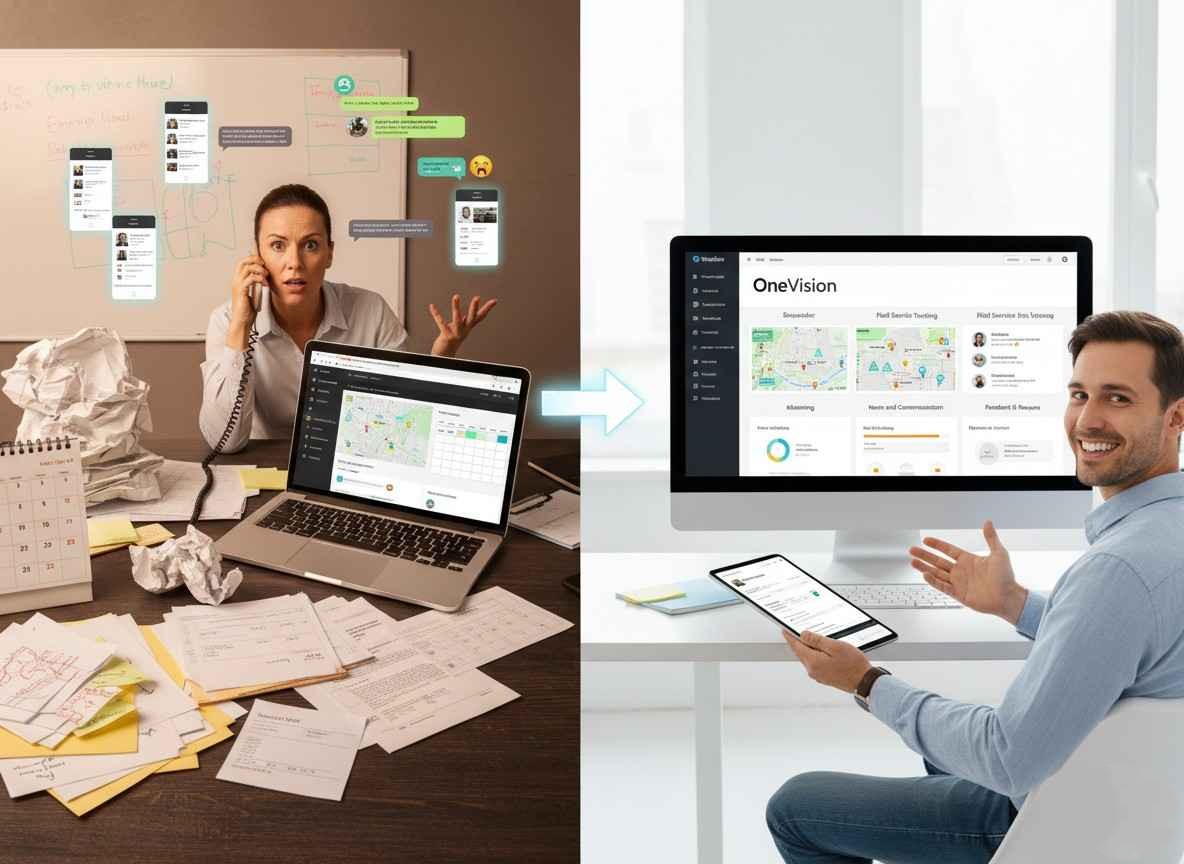
A retail manager sends shift schedules over WhatsApp every Sunday. Half the team misses the message, one person reads it wrong, and by Monday morning, there is a gap on the floor. The manager fixes it by calling people at the last minute. It works. So it becomes the system.
Multiply that by 52 weeks, and you have a manager who has spent hours every year doing emergency staffing calls instead of managing the actual business.
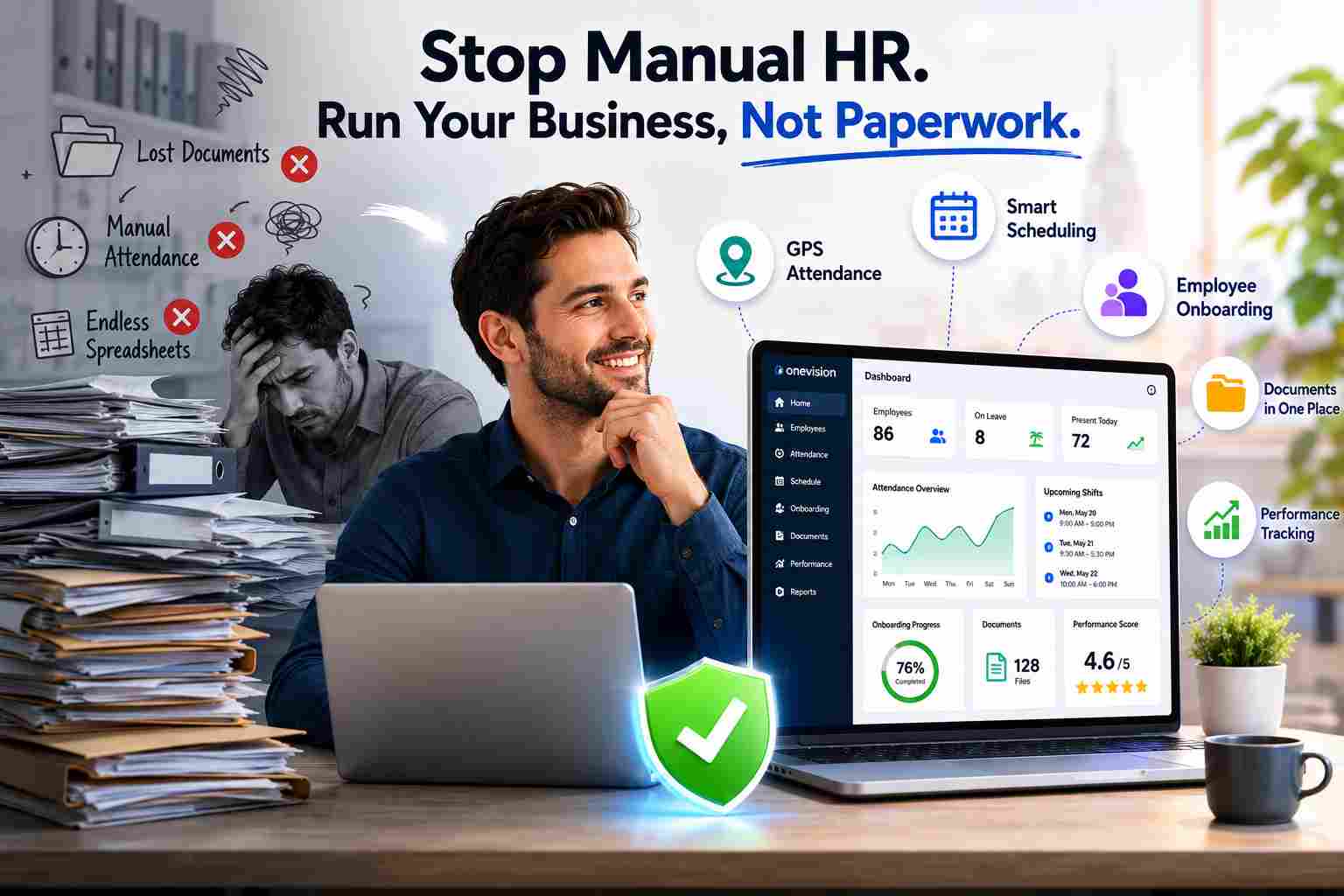
The best HR software does not just automate tasks. It eliminates the entire category of problems. Shift scheduling software with GPS clock-in means the schedule goes out through one channel, everyone receives it, and attendance logs itself. The Sunday WhatsApp scramble simply stops existing.
What Happens When You Do Not Have Proper Workforce Management
Let's go through where the real damage happens, because it is rarely where people expect.
Scheduling Conflicts
Without centralized employee scheduling software, you end up with two people scheduled for the same slot, one person pulled into double coverage, and someone else who needed that Friday off and never got a confirmation either way. Each mistake takes twenty minutes to fix. Across a team of fifteen, this happens multiple times a week.
Onboarding Issues
Employee onboarding software exists because onboarding without a system is genuinely chaotic. The new person arrives, their manager is busy, someone hands them a folder and says 'Read through this,' and three days later, they are still not set up on half the tools they need. That is not a people problem. That is a process problem. A structured onboarding flow with assigned steps, document sign-offs, and progress tracking changes that completely.
Performance Issues
When there is no employee performance management software in place, feedback happens informally, if it happens at all. Small problems that could have been corrected early become big ones. And when things do escalate, there is no documentation trail to reference.
Compliance Becomes a Liability
HR compliance software tracks things like certifications, working hour limits, and required documentation. Without it, businesses routinely fall out of compliance without knowing it. That is not just an operational risk. In regulated industries like healthcare, manufacturing, or food service, it is a legal requirement.
Delays in Training
Employee training management software keeps track of who completed what and when it needs to be renewed. Without it, a food safety certification lapses, a forklift operator's license expires, and the first time anyone finds out is when there is an incident or an inspection.
The Hidden Cost of Getting This Wrong
Business owners are very good at calculating obvious costs. Rent, payroll, inventory. They are not as good at calculating the cost of operational friction.
Here is a rough way to think about it. If a manager spends 3 hours a week on manual scheduling, that is 150 hours a year. At a loaded cost of $30 per hour, that is $4,500 a year on just one manager doing one task that workforce automation software eliminates. Add the time spent chasing timesheets, manually pulling reports, handling avoidable scheduling conflicts, and re-onboarding employees who left because the experience was disorganized, and you are looking at a number that would make most business owners genuinely uncomfortable.
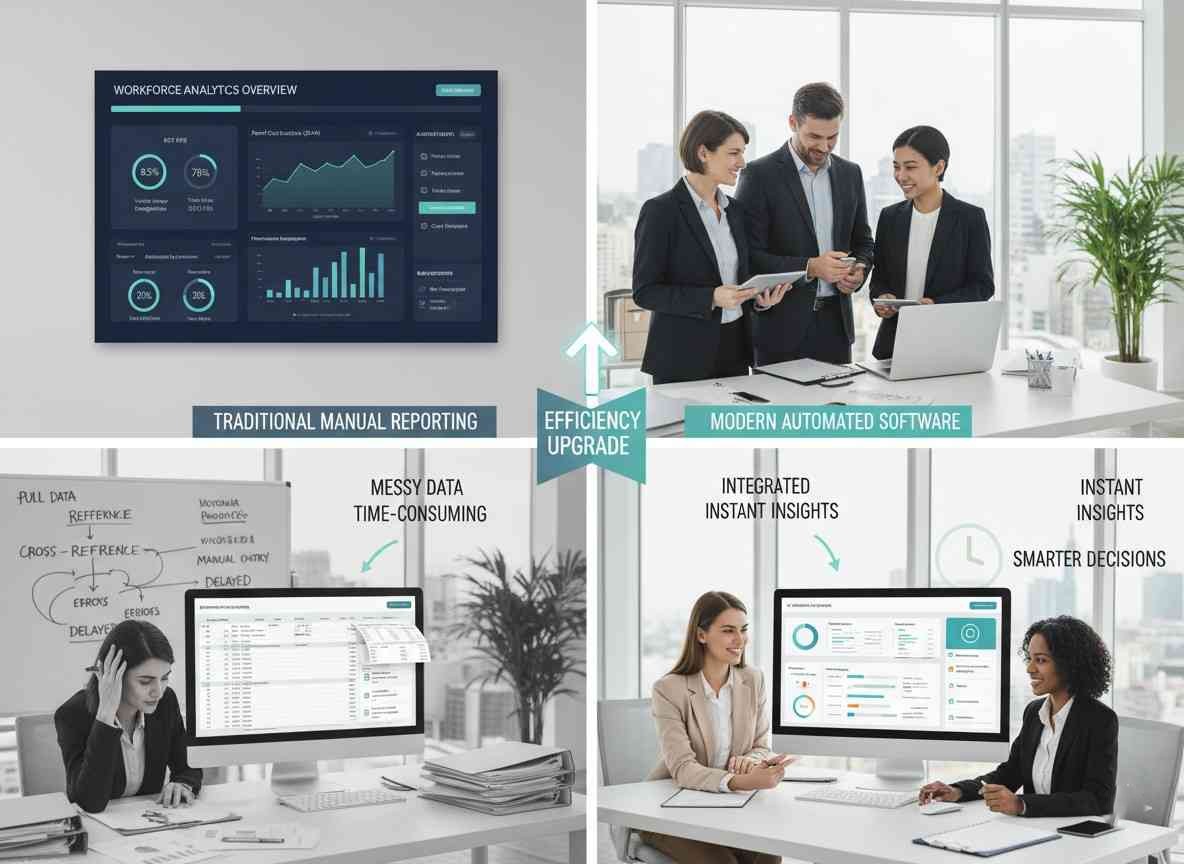
Cloud-based HR software with built-in workforce analytics software shows you these numbers. Not as a guess. As actual data. Hours worked versus hours scheduled. Overtime trends. Turnover by department and timeframe. When you can see the patterns, you can actually change them.
Why Delaying Better Workforce Systems Costs More Than You Think
There is a version of this conversation that every growing business has: 'We will implement proper systems once we scale.' The problem is that poor systems are one of the main reasons businesses struggle to scale.
When you are running workforce management on spreadsheets and group chats, adding ten more employees does not make the system work better. It makes it break faster. The communication gaps get wider. The scheduling errors multiply. The compliance risks compound.
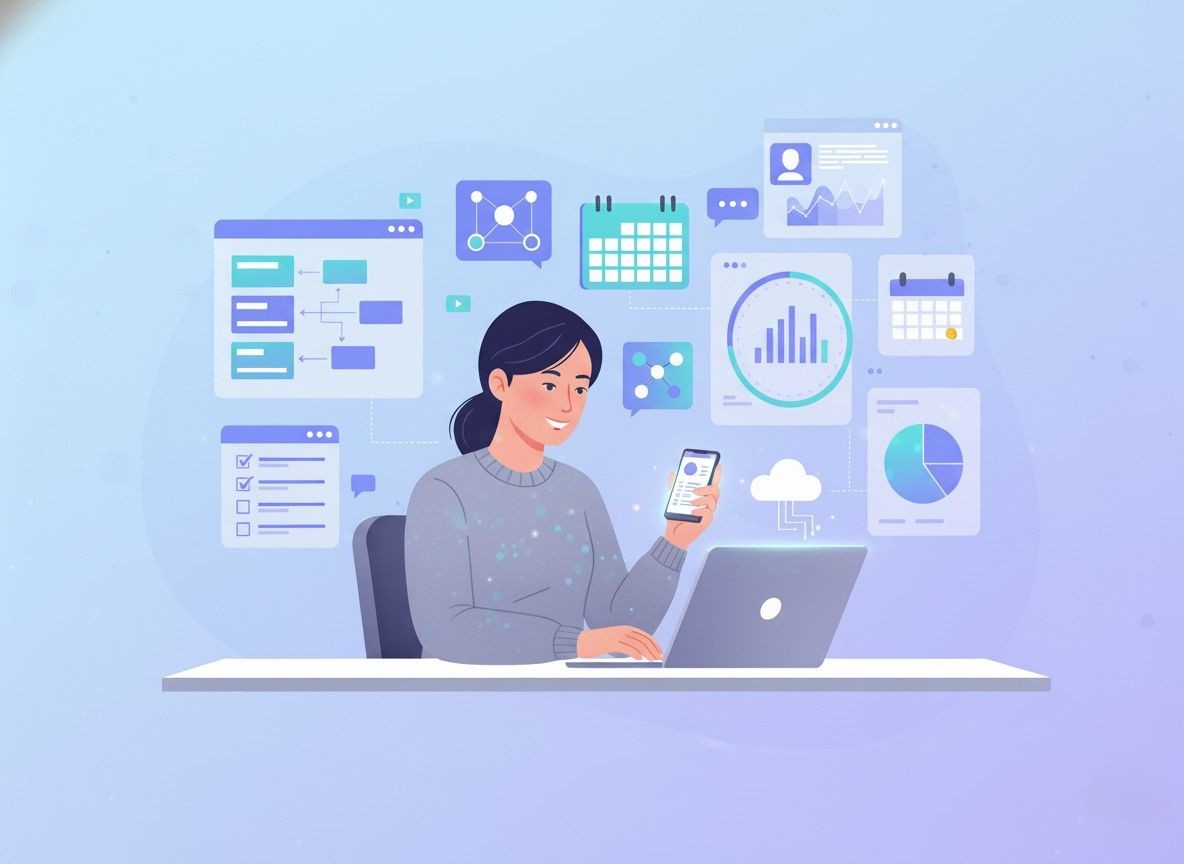
All-in-one HR software is specifically designed for this. The goal is not to have six different tools loosely connected. It is to have scheduling, HR records, onboarding, training, communication, feedback, and analytics all in one place, talking to each other, so that a change in one area reflects instantly across the rest.
That is not a luxury for enterprise companies. That is the baseline for running a workforce without constant manual intervention.
The Best HR Software Works Beyond HR Tasks
This is probably the most common misconception. People hear 'HR software' and picture an HR department using it. But the platforms that actually move the needle are ones where everyone has a role.
Employees
Can view their own schedules, request shift swaps, complete training modules, and submit feedback without going through a manager for every single thing.
Line managers
Get real-time visibility on who is in, who is late, who is due for a review, and where their team's training gaps are.
HR or business owners
Get the analytics dashboard they need to make actual decisions, not ones based on gut feel and incomplete information.
Remote or distributed teams
Stay connected through an employee communication platform built into the same system, not a separate tool.
This is what makes workforce productivity tools actually work. Not the features in isolation. The fact that everyone is operating from the same source of truth.
What to Look for Before You Choose a Platform
Not every HR software for small businesses is built the same way. Before you pick anything, these are the questions worth asking.
Workflow Handling
Some platforms are built for large enterprises and feel clunky at a smaller scale. Others are genuinely designed for how a 20 to 150-person team actually operates.
Integrated Scheduling
Is scheduling truly integrated with HR records? HR software with scheduling is a completely different product from a scheduling tool bolted onto an HR system. The difference matters when you are trying to do things like auto-flag overtime, pull payroll-ready reports, or see attendance data alongside performance trends.
Easy to Use for Teams
Can your team actually use it? Digital HR software only delivers value if adoption is real. An employee communication platform nobody uses is just another app icon. Look for platforms with mobile access, clean interfaces, and self-service tools that make employees want to use them.
Analytics That Drive Action
Does it give you data you can act on? Workforce analytics software should surface things like which departments have high absenteeism, where overtime costs are spiking, and how training completion correlates with performance. If it only shows you basic headcounts and shift logs, it is not analytics. It is just reporting.
Conclusion
The best HR software solves your problems by building a system where the right information gets to the right person at the right time, automatically.
OneVision brings together shift scheduling, HR management, employee onboarding, training, analytics, feedback, and internal communications into one platform built specifically for businesses that need everything connected and nothing duplicated. If your current setup involves three group chats, a spreadsheet, and someone's memory, it might be worth seeing what a proper system actually looks like.
Frequently Asked Questions
Read Other Blogs
Explore more insights and tips on business management







Why Use Software That Helps in Managing a Business?
When running a company, you need software that helps in managing a business, as its tasks, teams, customers, and finances all need your attention. Discover why companies are adopting all-in-one business management systems.